


Blind Hole vs Through Hole: What Is the Difference in CNC Machining?
Hole design is an important part of CNC machining because the type, depth, and location of a hole directly affect how a component is assembled. Two common hole types used across industrial manufacturing are through holes and blind holes.
A through hole passes completely through the component, while a blind hole stops at a specified depth without breaking through the opposite surface. Understanding this difference helps engineers communicate machining requirements clearly and select the right drilling, reaming, and tapping processes for efficient production.
What Is a Through Hole?
A through hole (or thru-hole) is a cylindrical opening drilled or milled entirely through a workpiece from one surface to another. Because the exit side is completely open, chips created by the cutting tool easily escape through the bottom during machining.
Through holes are commonly used for passing bolts, pins, shafts, or fluids completely through a part. They are simpler to machine because tool depth limits do not need strict bottoming control, making them a cost-effective choice for clearance and mounting features.
What Is a Blind Hole?
A blind hole is an opening drilled to a specific depth that does not break through the opposite side of the workpiece. The bottom of a blind hole remains closed, typically featuring a small conical tip produced by the drill bit point unless flattened with an end mill.
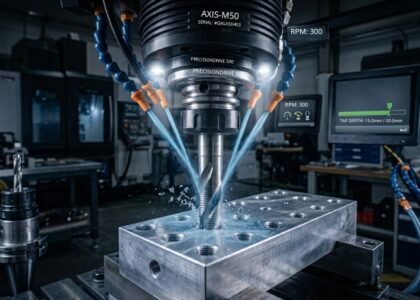
Because the bottom is closed, chip evacuation is more challenging during drilling and tapping. CNC machinery must precisely monitor $Z$-axis movement to prevent tool crashes at the hole bottom while ensuring the effective thread or clearance depth meets engineering requirements.
Conclusion
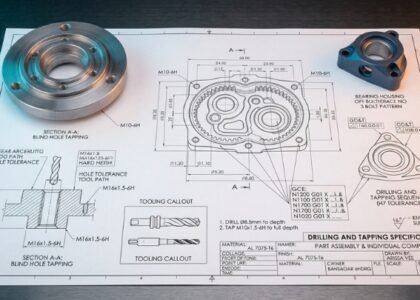
Choosing between a blind hole and a through hole comes down to component functionality, structural needs, and assembly constraints. While through holes offer easy chip clearance and simple tapping, blind holes provide crucial fluid containment and clean exterior surfaces. Communicating these requirements clearly on technical drawings ensures accurate CNC machining, proper thread execution, and seamless final assembly.

 Users Today : 0
 Users This Month : 1
 Total Users : 2